
Shopping Cart
There are no more items in your cart
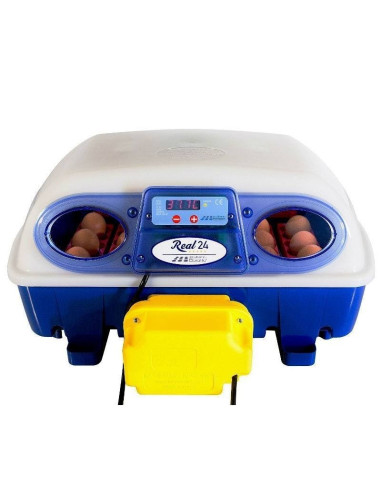
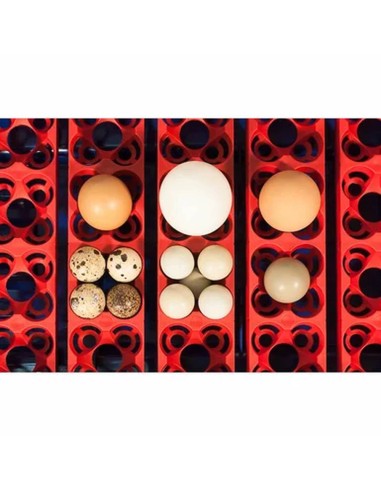
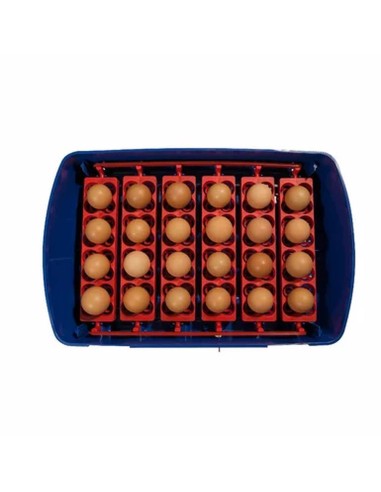
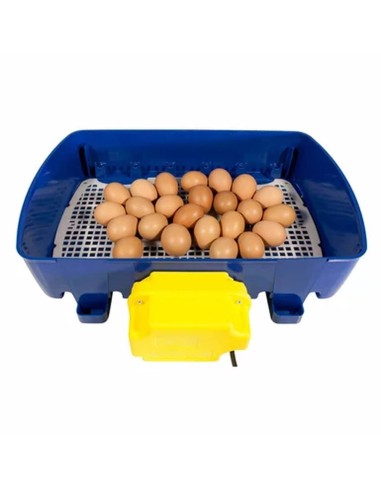
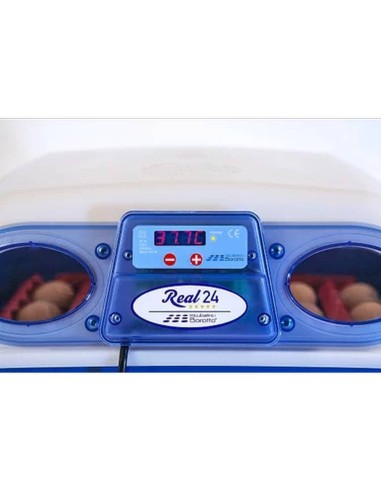
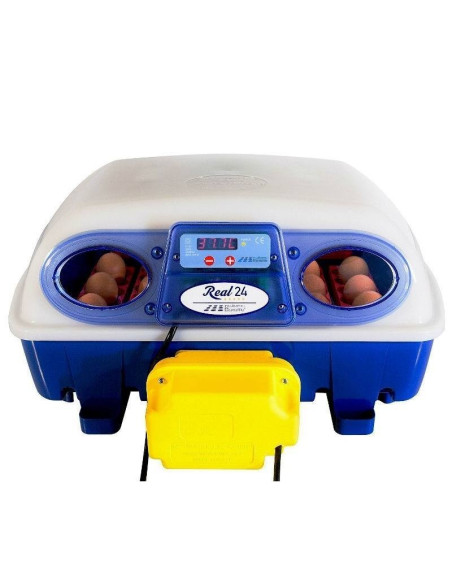
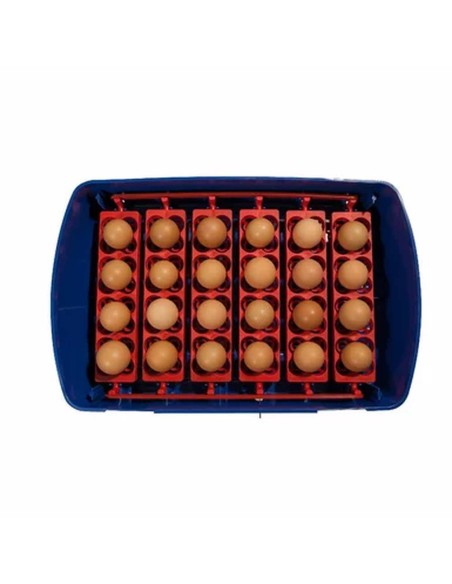
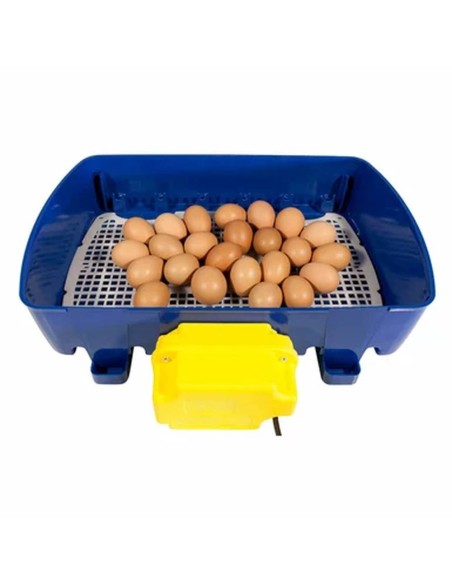
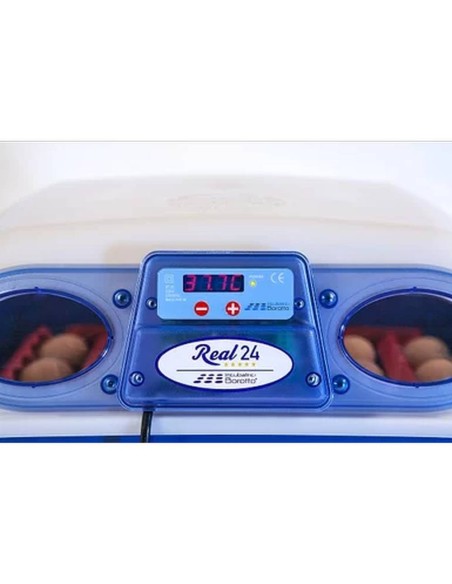

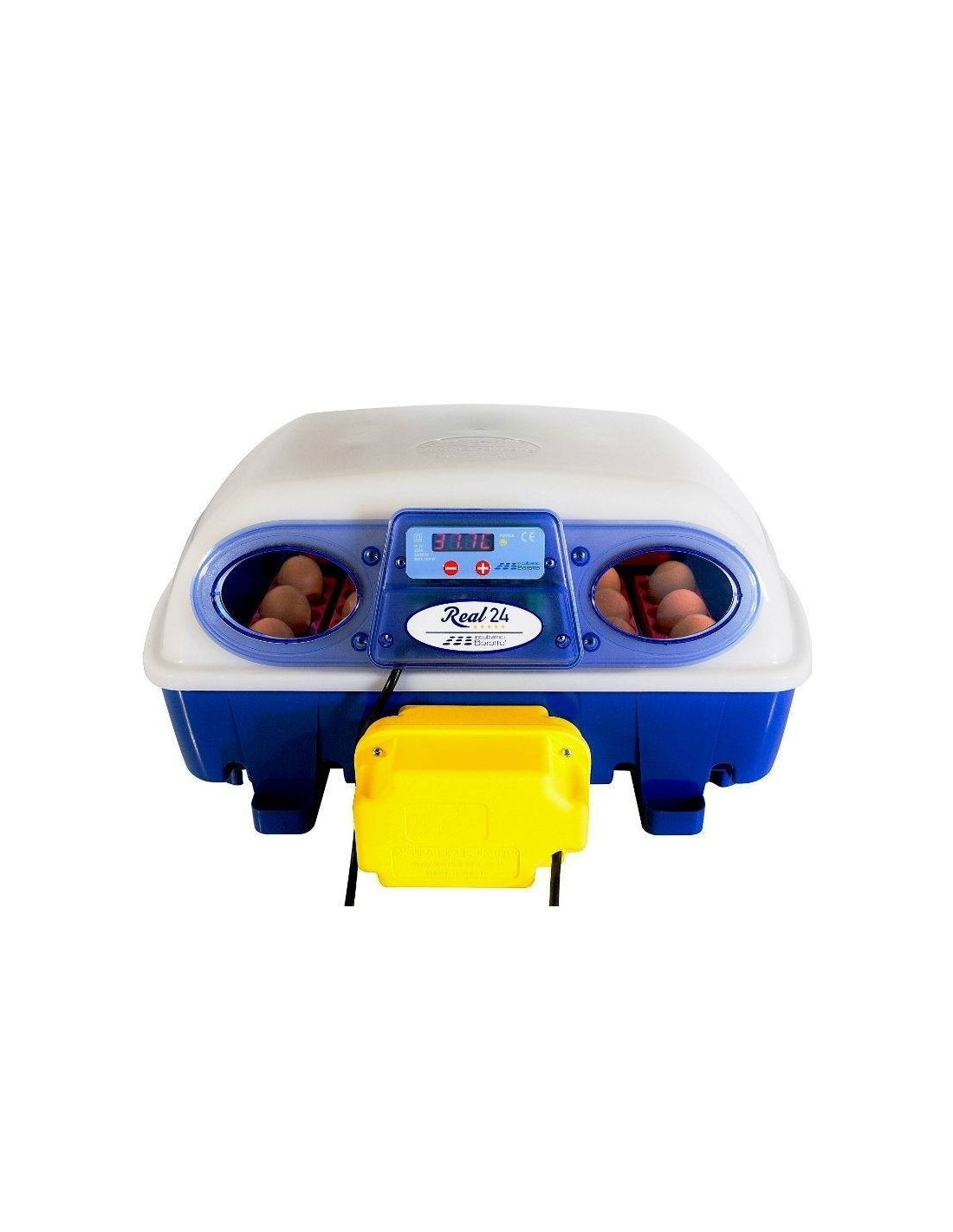
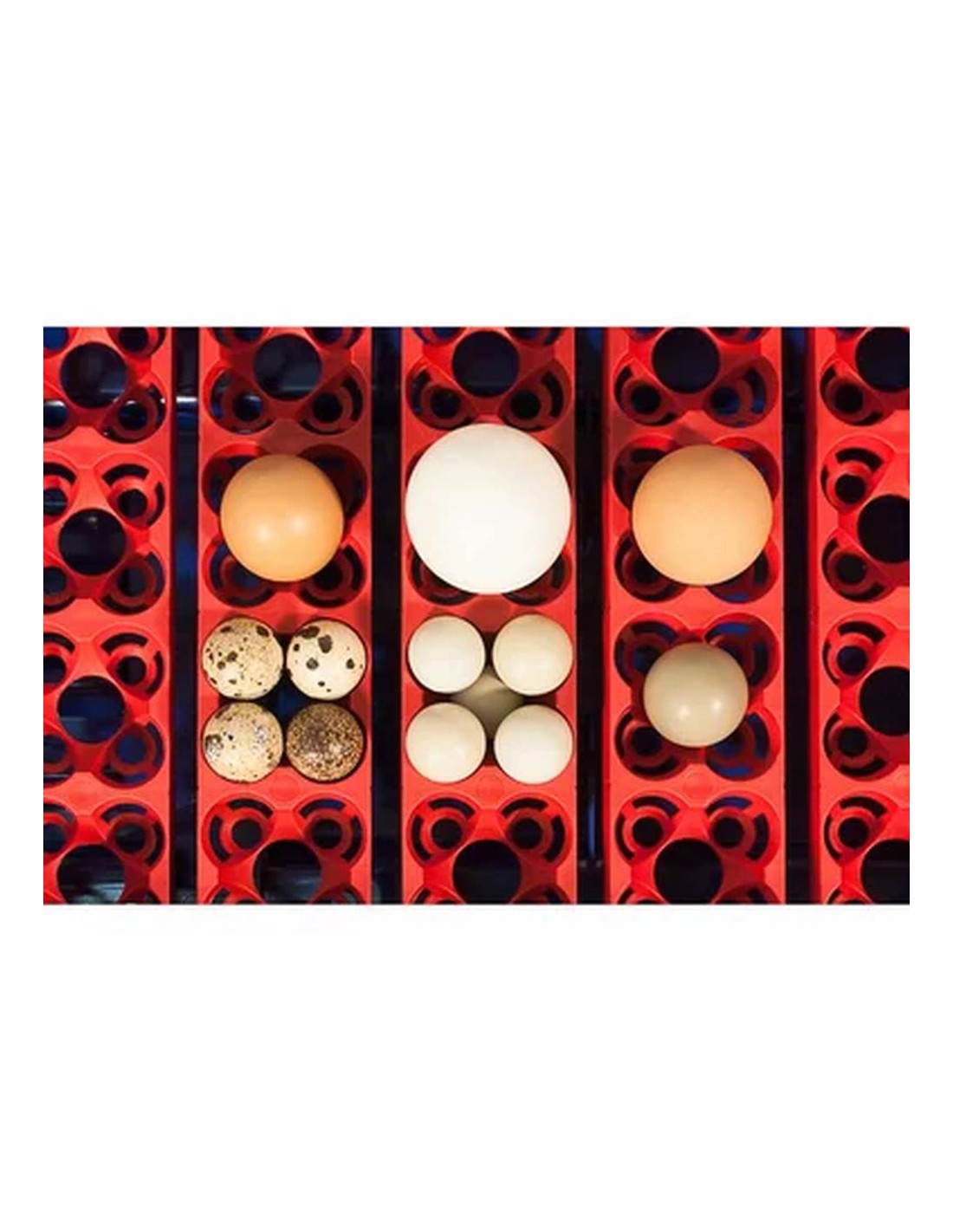
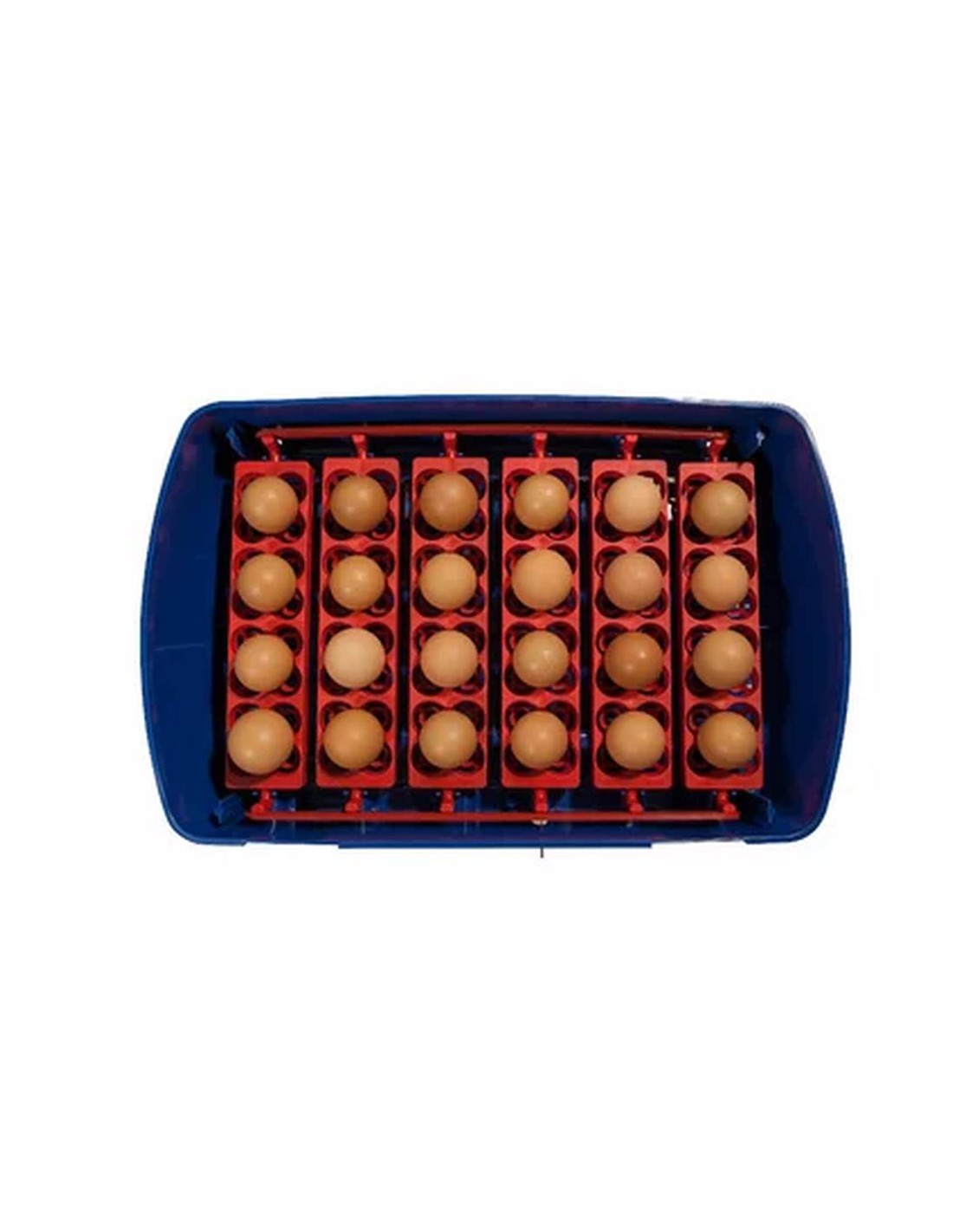
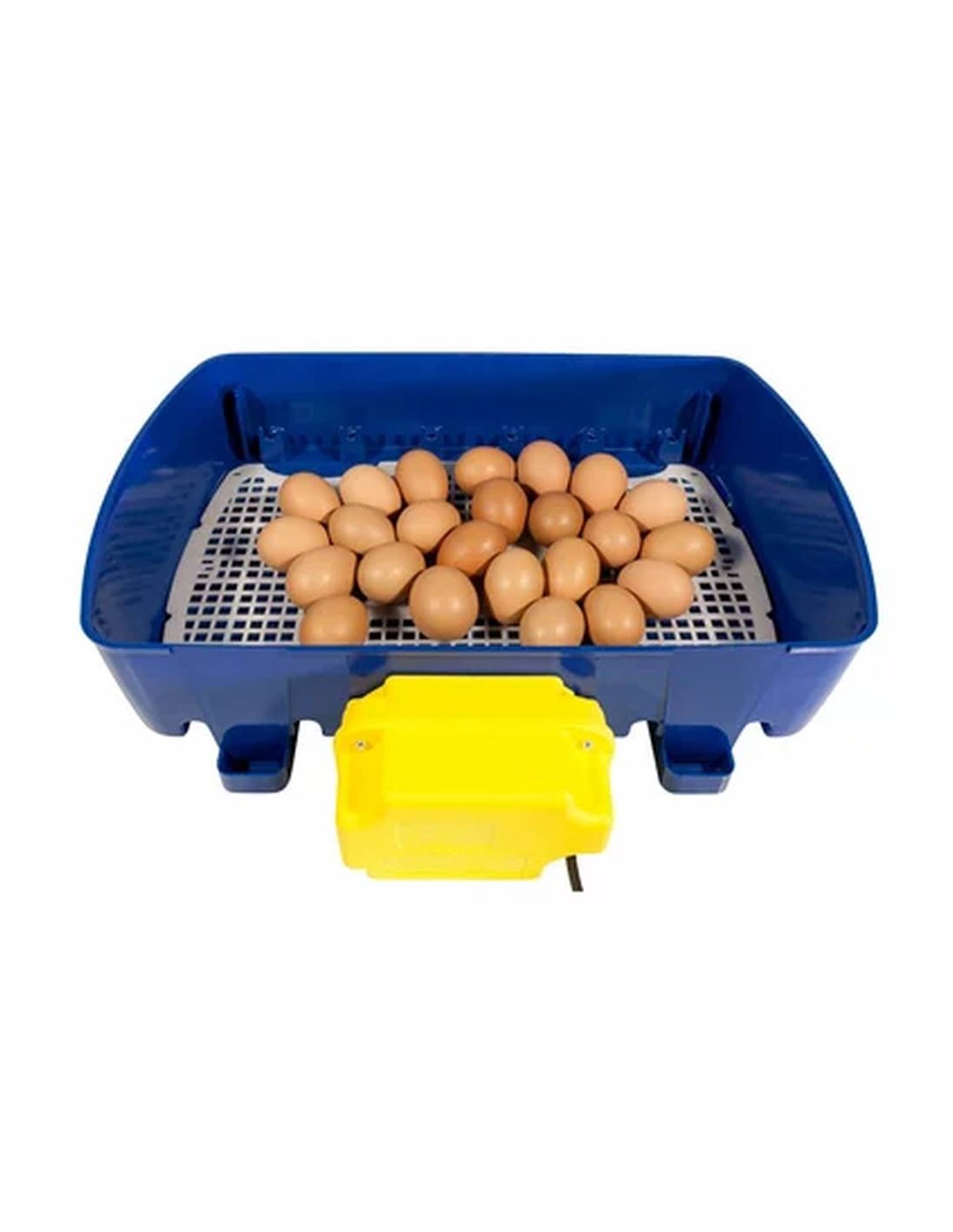
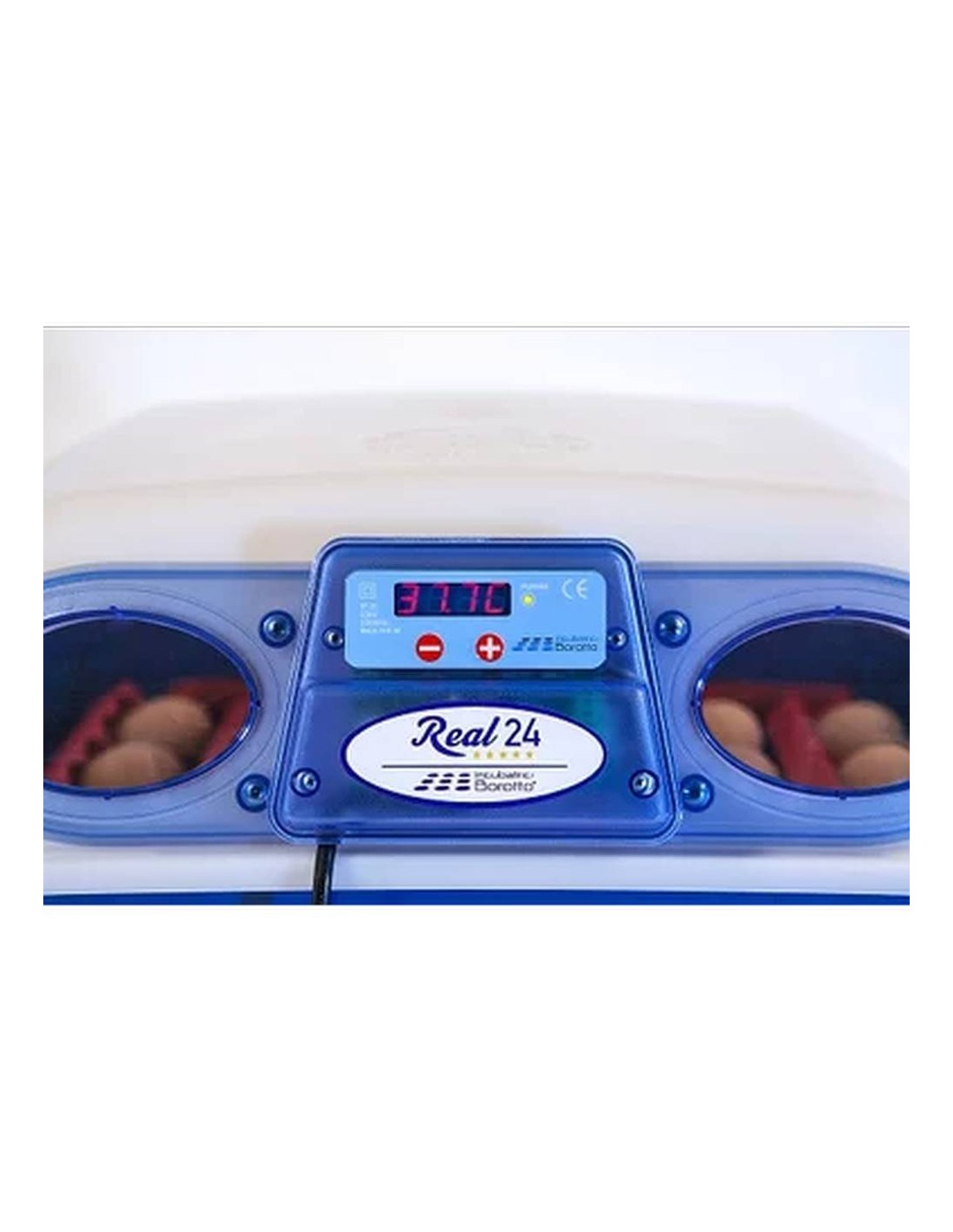
The "REAL" line of automatic incubators is suitable for the incubation of any type of egg, with capacities of 12, 24 or 49 eggs the size of goose or chicken, or 48, 96 or 196 of partridge, quail or any bird, depending on the model, without the need to change accessories.
It has an automatic 45º turning system, which is carried out very slowly from one side to the other, in an almost imperceptible way. This turning is necessary so that the embryo does not remain attached to the shell membrane, thereby avoiding losses.
Main Features
- The incubator is made of plastic material with Biomaster additive, which contains an innovative component that prevents the appearance of bacteria and contaminants that could affect the asepsis of the device.
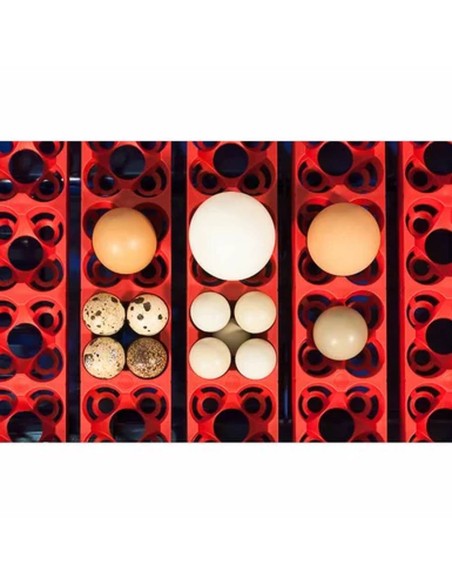
- Its special tray allows you to place one or four eggs per hole, depending on size, vertically, positioning it more conveniently, while considerably reducing space.
- Digital screen, for comfortable and precise management of the incubation environment.
- Software for permanent automatic digital control of temperature, humidity and ventilation, avoiding stops and starts with their consequent variations in optimal levels.
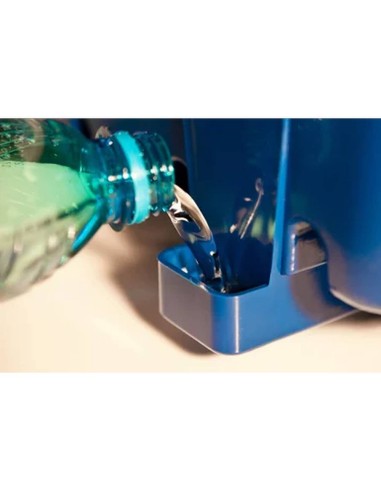
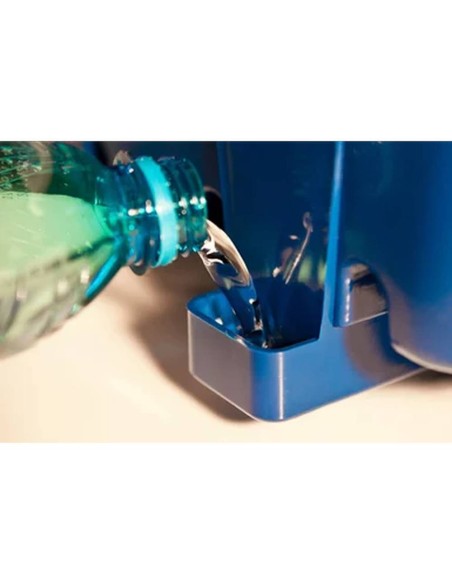
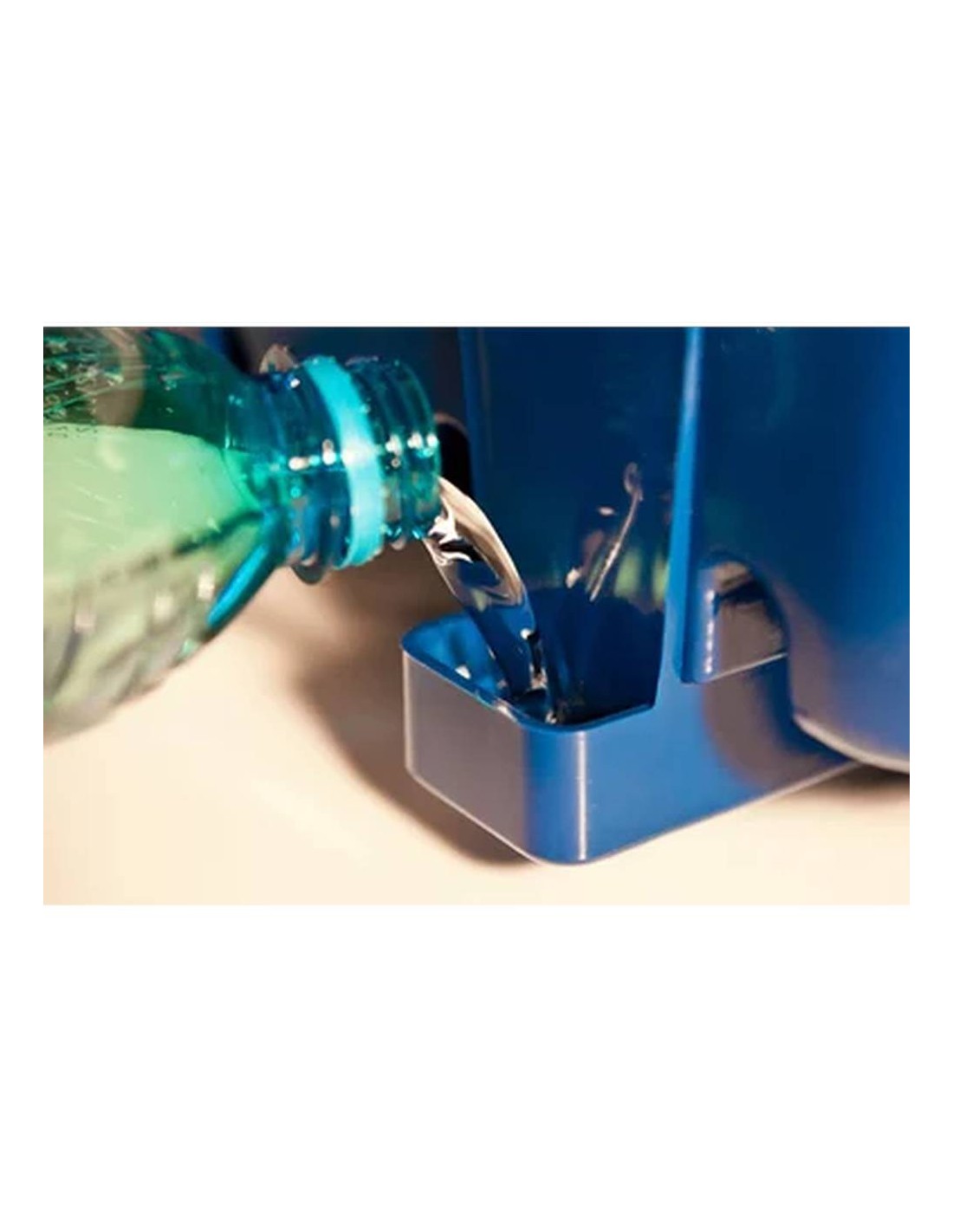
- The water is filled from the outside of the incubator, so it is not necessary to open it, avoiding alteration of the environment.
- The interior ventilation is perimeter, which distributes the environmental conditions more homogeneously.
- The quality control of the BOROTTO incubator is done individually for each unit.
- The product complies with CEE quality and safety regulations, also having a grille that prevents accidental access to the mechanism and the heat source.
REAL incubators have three patented systems:
Universal alveoli system
First and only professional egg cup capable of holding all types of eggs in a vertical position, from goose to quail. Instead of one chicken egg, 4 small eggs can be placed in all the cups, allowing up to 196 quail eggs to be incubated in a very small space, reducing electrical energy consumption.
Filling with external water
The internal water tanks can be filled by hand, by pouring water into the fillers from the outside of the incubator. Its handling is quick and practical, drastically reducing the loss of humidity and temperature that would otherwise be lost when opening the incubator.
Thermal insulated ventilation
The internal ventilation is supplied by a silent turbine, which draws air from below and carries it over the side walls, creating a hot air barrier. In addition, thanks to a refined and aerodynamic design unique in its category, a uniform temperature and humidity is guaranteed inside the incubator.
Recommendations for use
In the first phase of incubation, the eggs should be placed inside the incubator with the thin pole facing down, since this will favor the development of the embryo and the head of the embryo is oriented towards the air chamber (space between the white and the shell). The turning of the eggs should be maintained for about 18 days, during which there will be 6 complete turnings per day (one every 4 hours).
Refilling the water, necessary to maintain the humidity level, is done through the tube that the incubator has, placing its nozzle in any container with warm water, so we will not have to open the incubator. It must be taken into account that too much humidity can damage the eggs, so it is advisable to fill with water only as recommended, normally twice a day, and in summer a larger amount of water. The internal humidity in the incubator should be 45 to 55% and temperature 37.7ºC, while it is advisable that the temperature of the place where the incubator is located, be between 14 and 18ºC and the humidity, between 65 and 75%.
By means of the electronic board, the optimal parameters of: temperature, humidity and ventilation are permanently controlled and regulated, without any starts and stops due to reaching certain maximum or minimum ranges. In addition, advanced software allows you to program, control and maintain the ideal internal temperature of the egg (37.7ºC) which is really interesting to maintain. With this we achieve the most favorable environment for optimal incubation.
(We may notice that the eggs that are in the central row of the incubator are warmer than the others, this does not affect the development of the embryo, this is only due to the central position, it is not relevant at all).< /p>
Starting on day 18, we turn off the incubator and remove the eggs from the tray, so that the chicks stop turning. The temperature will be lowered to 37.2ºC so that hatching can occur in the following three days. These need to position themselves inside the egg to be able to first bite the membrane that gives access to the air bubble and then bite the shell and they do it better if they are still and calm.
Hatching begins at 18 to 21 days, when the embryo makes a hole through the membranes and pokes its beak into the air chamber. Therefore, on day 18, after having turned off the incubator motor, we take the eggs (being in a vertical position), we leave them very carefully on a soft/soft surface such as a towel, or blanket , we put the plastic grid on the base of the incubator and we put the eggs back into the incubator very delicately, we close the lid, and we put warm water again (the humidity will then be around 60-65%).
The hatching then begins, in these 3 days you should NOT open the incubator, even if the chicks have hatched, so that the humidity they need does not come out, if it were strictly necessary, it is recommended 1, 2, maximum 3 times day, to remove those already born, although they must be inside for 12 hours, from the moment they are born, and can stay up to 3 days (maximum) without problem.